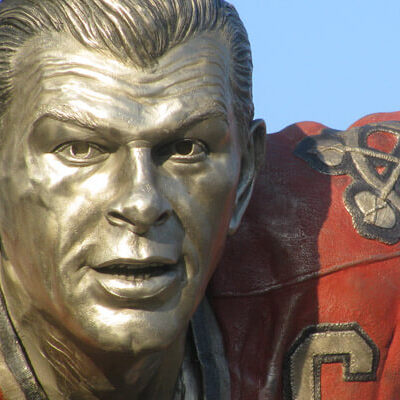
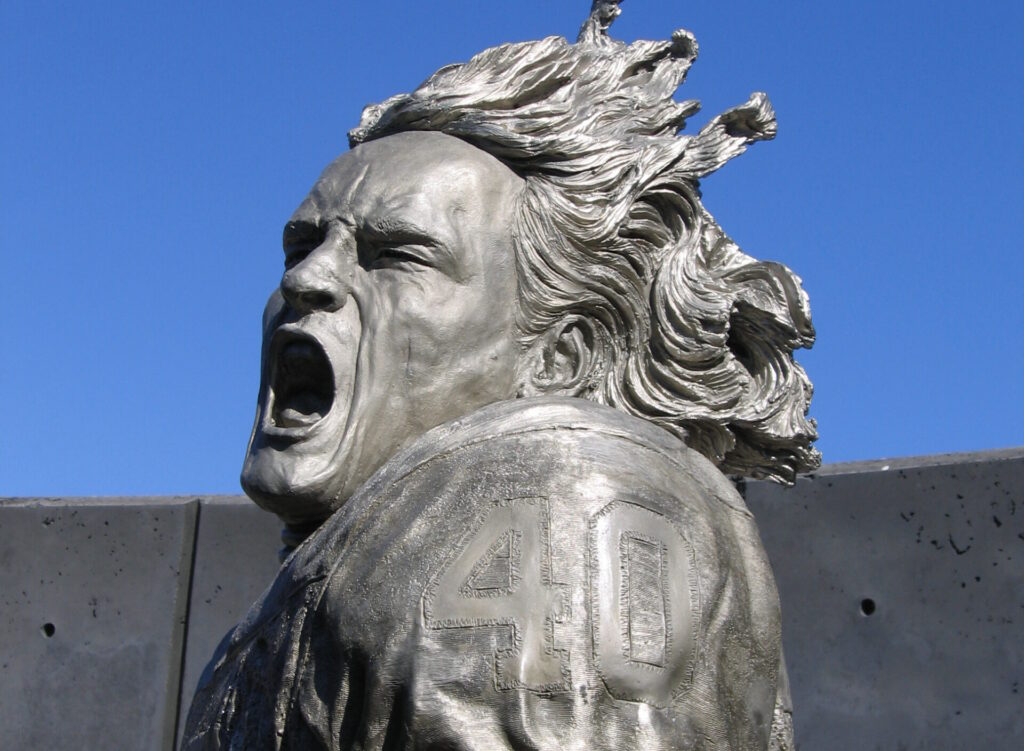
Sculpture is a unique form of art that allows artists to depict human experiences and emotions with great accuracy. While capturing likeness plays a big role in figurative sculpture, it isn’t the only thing to consider when it comes to articulating emotion in bronze. Through careful consideration of expression, posture, texture, scale, and symbolism, sculptors can construct emotional depth in their work.
Expression: Beyond Realism
The face is often the first place we look for emotion. It is one of the most important features for sculptors to get right. Sculpting faces goes beyond replicating the subject’s features, it’s about accurately capturing their character in a way that tells their story.
There are a few techniques sculptors use to capture likeness and emotional depth. Expert knowledge of facial anatomy allows artists to exaggerate certain muscles and shift different features to mimic the natural movements of the face, helping create an illusion of realistic facial tension. Capturing subtle textures like fine lines helps mirror what the face does naturally when we express emotion. A smoother face with less lines and shadows indicates peace and warmth, while more lines and shadows convey determination, focus, and strength. The most minute details of the face can completely change the story behind a piece.
Sculptors rarely depict a face at complete rest. Rather, they capture the face at a point of dynamic transition. This allows the underlying muscles, subtle lines, and shadows to be emphasized, contributing to successfully capturing a portrait with true likeness. Capturing dynamic movements allows artists to freeze a moment in time and capture the height of emotional depth and intensity, telling a story with one still moment.
Body Language: Subconscious Storytelling
Body language is one of the most powerful tools sculptures use to communicate emotion in a piece. Shoulder position, angle of the torso, placement of the hands and feet, all communicate to viewers the feeling of a piece. This allows artists to give viewers insight into the specific moment behind the sculpture without using words. For example, an athlete leaning forward can convey focus and determination, and a relaxed stance shows confidence.
Body language is particularly important in monumental sculpture because viewers can experience the sculpture from multiple angles and distances. The silhouette of the piece should communicate the story and feeling behind a sculpture before viewers notice finer details. The ability to capture a single moment lets artists create the feeling of motion without it being present, resulting in more visually engaging and impactful monuments.
A Quality Finish
A patina is a thin, colored surface layer on the sculpture that is created from chemical changes to the metal. They range in tone from golden bronze to deep brown to green finished that appear weathered. The various types of patinas each bring a different feeling to a sculpture.
A polished, bright bronze surface emphasizes smooth form, signaling elegance and luxury. A darker, more textured bronze reflects the traditional qualities of the art form and adds realism to the piece. Different finishes reflect light and shadows in different ways, a technique that emphasizes specific emotions and enhances details.
Scale, Space, & Environment
Sculpture is an interesting artform as it exists within three-dimensional space, meaning its immediate environment impacts how the work is perceived by viewers. Space and environment are both important factors to consider when dealing with public art, as the surroundings of the piece become part of the work itself.
Artists consider the angles a sculpture will be approached from, where viewers stand, and what they see from a distance. A monument that lives in a stadium may be experienced differently than one in a civic plaza. Light and shadow are also significant, as lighting conditions can completely change the way the same artwork is understood.
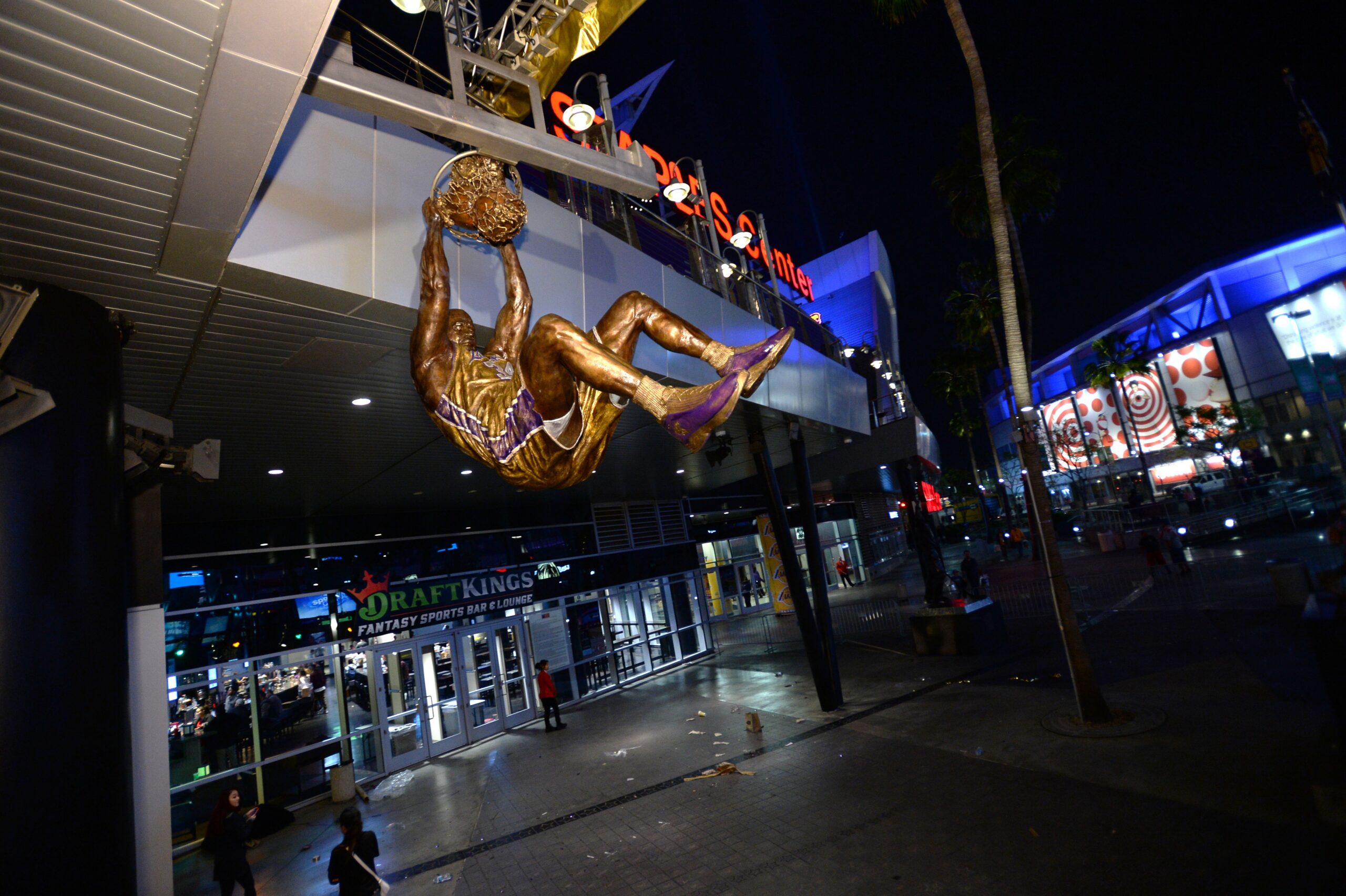
Scale also shapes how the viewer experiences a sculpture. Life-size figures often evoke feelings of deep connection. Their familiar proportions can give the impression of standing beside a person. Large scale sculptures create feelings of wonder, respect, and power. When observing a sculpture that is, literally, larger than life, viewers sense that this person’s story is inspirational and of great significance. Most of our monuments are scaled up for this reason, to give proper respect to those we are honoring with art.
Symbolism in Sculpture
Consideration of what a sculpture represents is just as critical as its physical form. Objects, gestures, and composition can all represent a symbolic meaning. A raised fist might represent triumph, an old uniform calls back to a defining part of the figure’s life. Symbolism allows a sculpture to move beyond an individual subject and speak to a larger story.
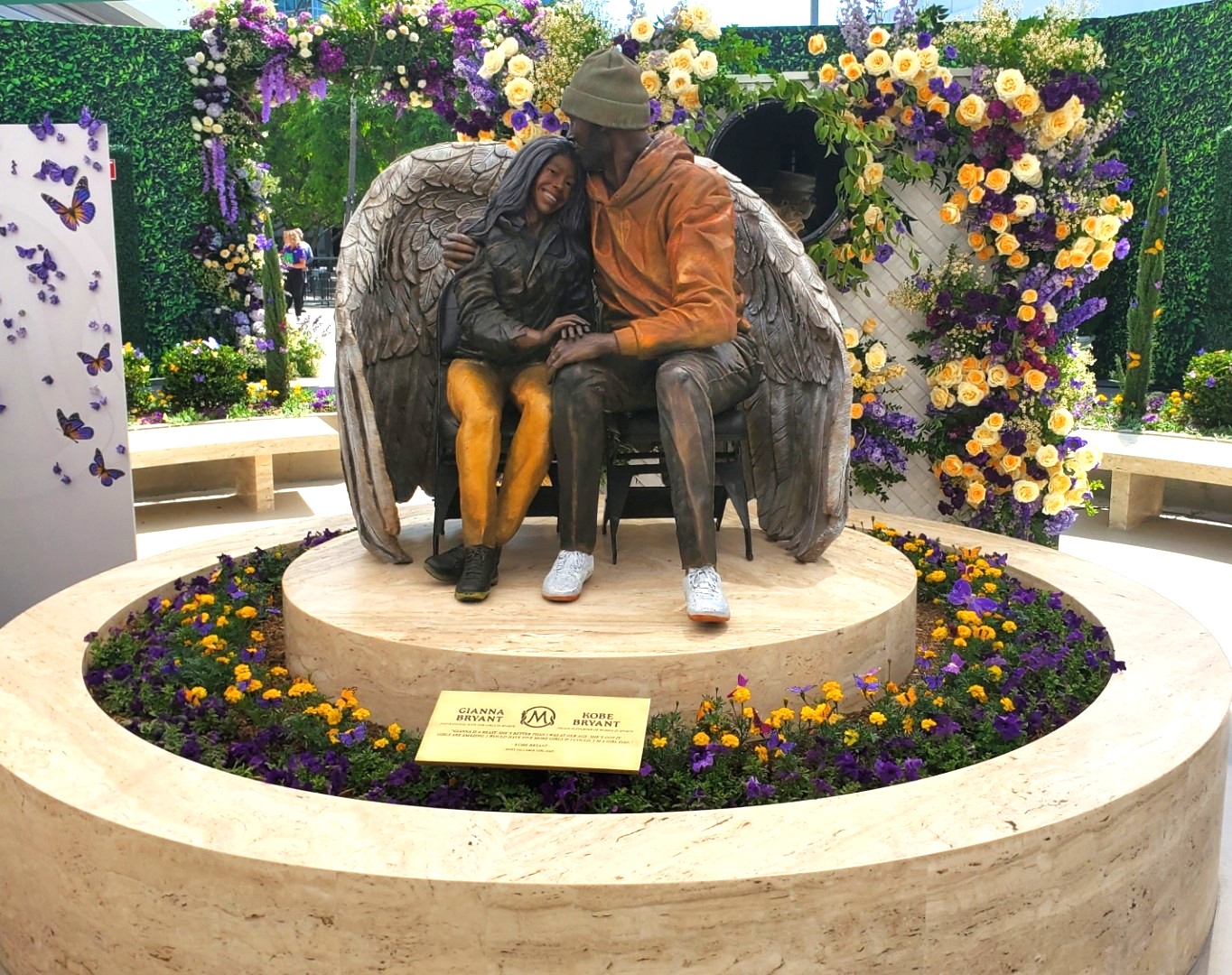
Symbolism was heavily considered when our studio was given the honor to sculpt a memorial for Kobe and Gianna Bryant. Angel wings encase the two in a pose is inspired by a courtside photo of Kobe embracing Gigi, demonstrating their shared love for the game. The surrounding hedges call back to Kobe’s childhood in Italy, while purple and gold flowers represent the Lakers colors that Kobe wore for 20 years. Around the memorial, engraved purple and gold butterflies symbolize transformation and hope for the family.
Emotion that Endures
Capturing emotion in bronze and stone is a balance between observation, craftsmanship, and storytelling. Artists study the subject carefully, but they also consider how viewers will encounter the finished work and what they should feel when they do.
Expression creates recognition. Body language creates movement and personality. Texture and patina give the material character. Scale and space establish presence. Symbolism gives the sculpture meaning beyond its physical form.
Together, these elements can transform bronze and stone into something that can preserve a moment, honor a legacy, and create an emotional connection that lasts for generations.
At Rotblatt Amrany Studio, that connection is at the heart of our work. Our monuments go beyond likeness to create work that communicates who our figures are, what they accomplished, and why their story matters. We invite you to explore our full portfolio to see how we integrate emotional depth into our monuments.