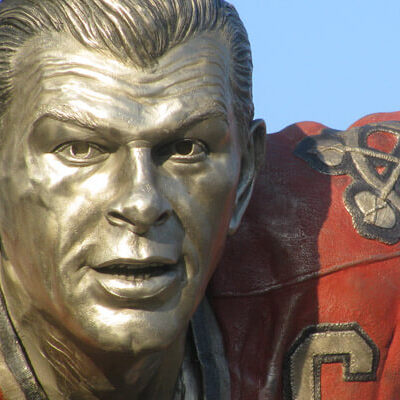
The lost wax casting process is a foundational technique when it comes to making monumental sculptures. The ancient process has been around since the 3rd millennium during the Bronze Age, during which it was used for crafting jewelry, small objects, and functional tools. Today, our studio uses it to transform expertly crafted clay sculptures into solid bronze monuments.
Lost wax casting is a process of transformation, where an artwork evolves through different mediums before reaching its final state. The pieces begin as clay, then are replicated in wax, molded using ceramic-based material, and finally finish as bronze or other metals.
From Clay to Wax
The casting process begins in clay where the figure is sculptured, refined, textured, and carefully detailed in clay. Even the most minute features must be flushed out at this stage, as the clay sculpture is the foundation for producing the version used in the final casting.
Once the sculpture is approved by a client, it moves to the mold making stage. During this process, the clay is encased to make a mold that will become the foundation for producing the wax version of the sculpture. When working with a monumental sculpture at large scale, this step can involve several individual sections that will eventually be assembled into the complete bronze form at the foundry.
The Wax Replica
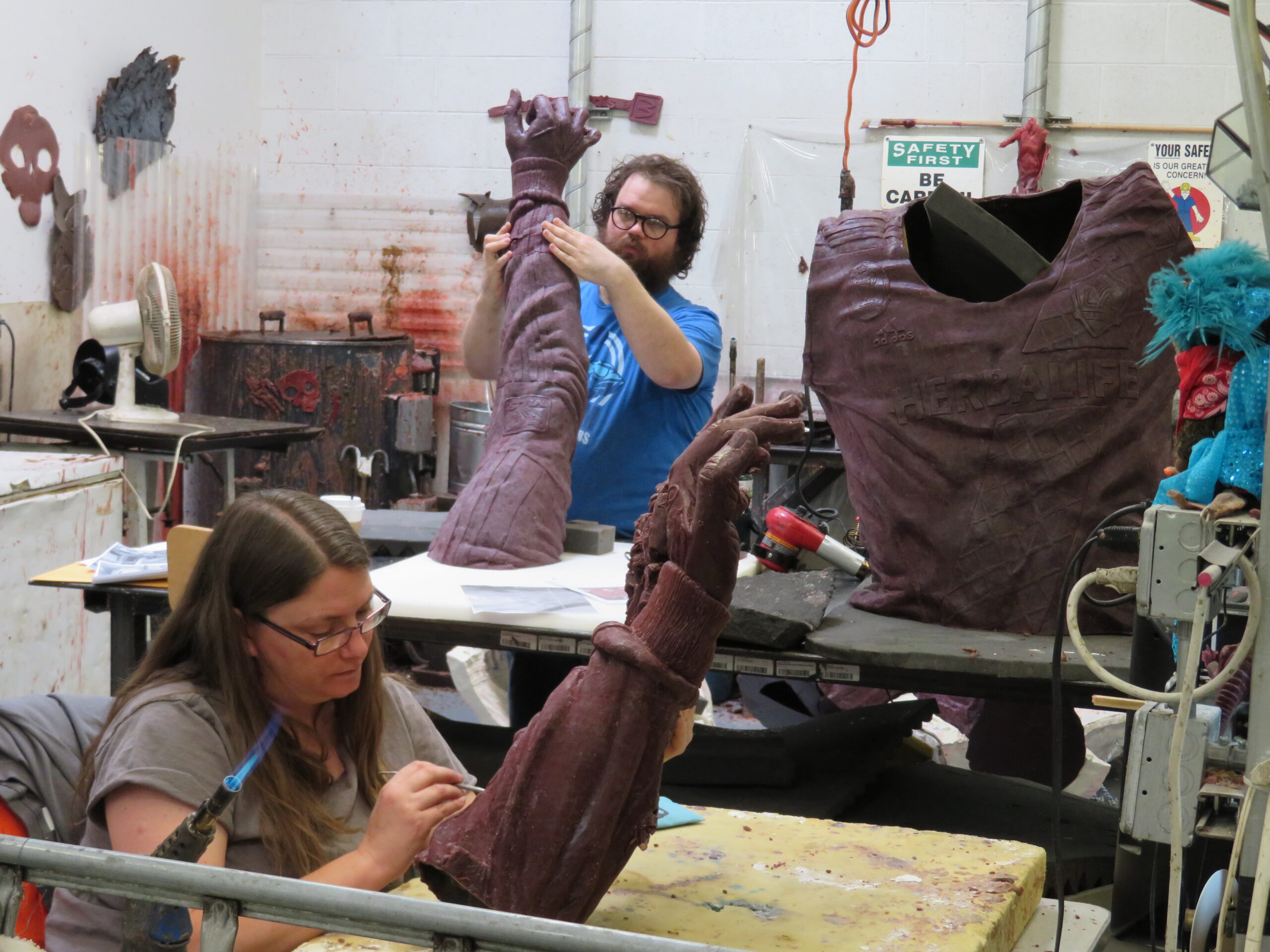
The wax replica is an essential part of the engineering behind the casting. All sections of the wax must be carefully inspected and refined as needed before getting prepared for the casting process, a process known as chasing.
Once fully refined, channels known as spurs and gates are attached to the wax. These channels create pathways that allow molten bronze to flow into the mold while letting gases escape during casting. Gates are thicker channels that deliver molten bronze directly into the mold cavity. Spurs are branching rods that assist with structural stability, metal flow, and ventilation.
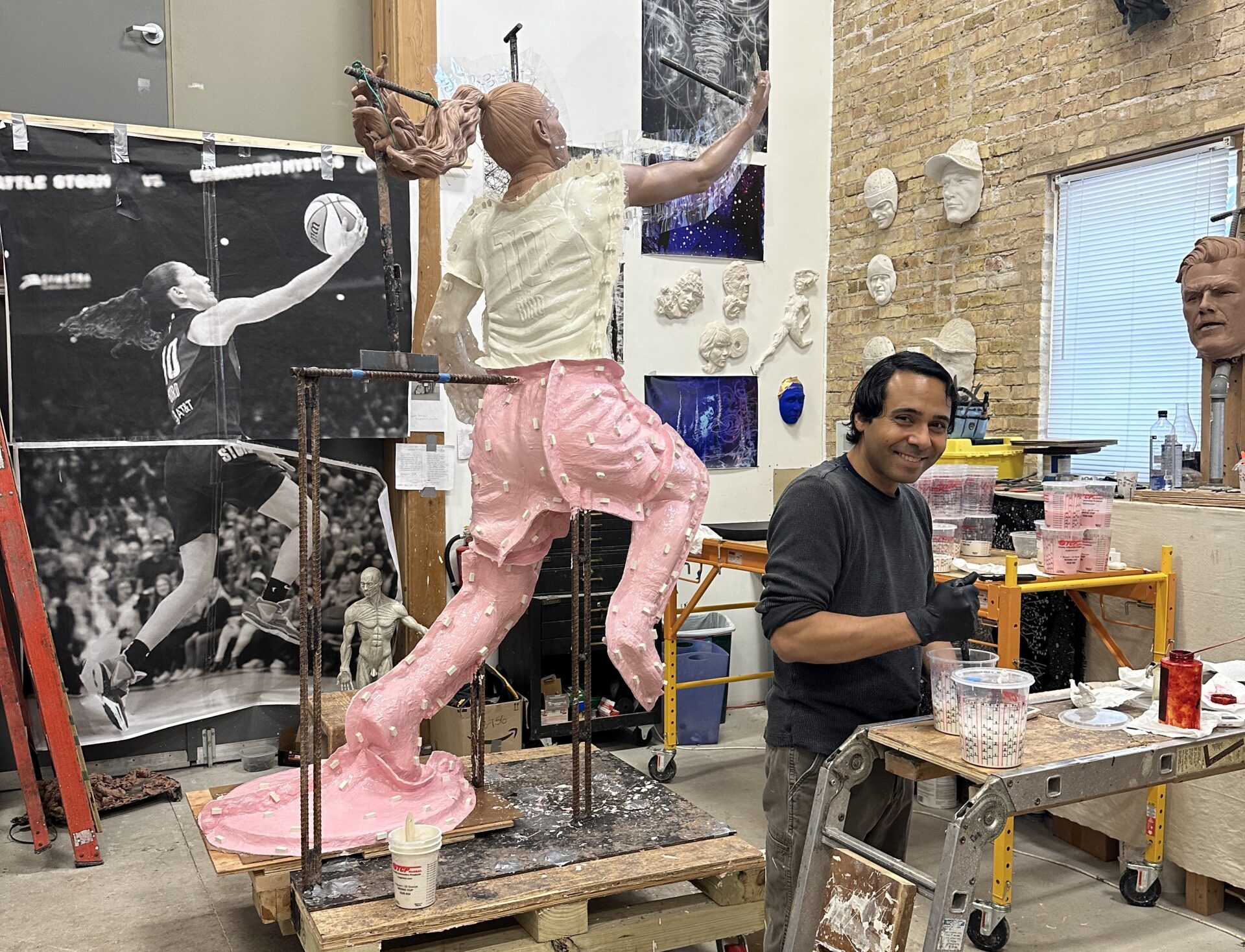
The placement of these channels is critical. Channel placement determines how liquid metal flows, how air escapes, and how metal cools. Faulty placement can result in flaws like air pockets, rough services, or cracks. A successful casting depends on a deep understanding of how liquid bronze will move through the mold.
Creating the Ceramic Shell
Once the wax is fully prepared, it is coated with layers of ceramic material. Each layer is allowed to dry before additional layers are applied, gradually building a strong shell around the wax sculpture. This shell ultimately becomes the mold that will hold the molten metal.
The process requires patience and precision. The ceramic shell must be strong enough to withstand the extreme temperatures and pressure involved in casting, while remaining capable of reproducing the fine details of the original sculpture.
Removing the Wax
The next part of the process is what gives the method its name. At the foundry, the ceramic shell is heated between 1,300-1,800°F until the hot temperate burnout melts and vaporizes the wax. This process also cures the ceramic shell so it can handle molten metal during the next phase.
What’s left is a hollow ceramic mold that preserves the exact shape, texture, and details of the original sculpture. At this stage, the form that began as clay is entirely “lost”, leaving behind only negative space that will become the finished bronze sculpture.
Pouring Molten Metal
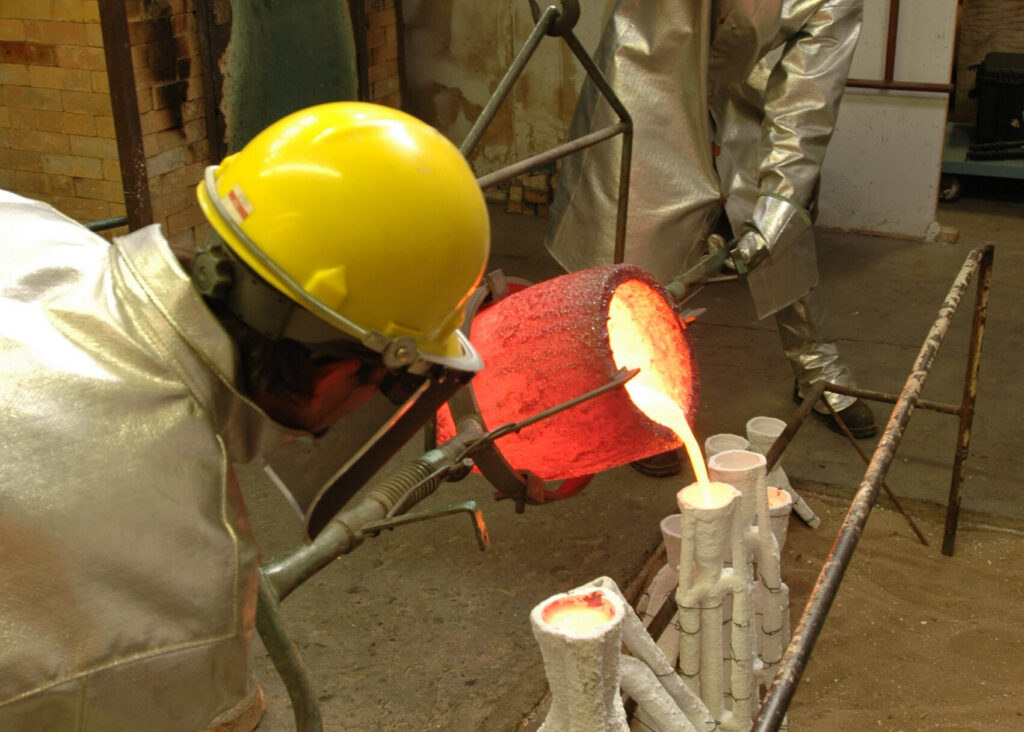
With the ceramic shell prepared, bronze is heated to around 2,000°F, turning it into a pourable liquid state. The molten metal is then carefully poured into the shell so that it flows through the gates and spurs, eventually filling the cavity once occupied by wax from the bottom up.
This is a highly controlled stage of the process. Temperature, timing, metal flow, and the condition of the mold all matter. Once the bronze cools and solidifies, the ceramic shell is carefully broken away.
With the mold broken, the bronze version of the sculpture is finally revealed. It is still unfinished at this stage but has gone from a temporary sculpture to a permanent mental form.
Chasing and Finishing the Bronze
After casting, each section of the sculpture is cleaned and inspected. Excess bronze from the sprues and gates is removed, and the surface is carefully refined.
Individual bronze sections may then be welded together, with the seams carefully blended so the final sculpture reads as a unified form. This stage requires an exceptional level of craftsmanship. It is imperative that the character, detail, and form on the original sculpture are preserved.
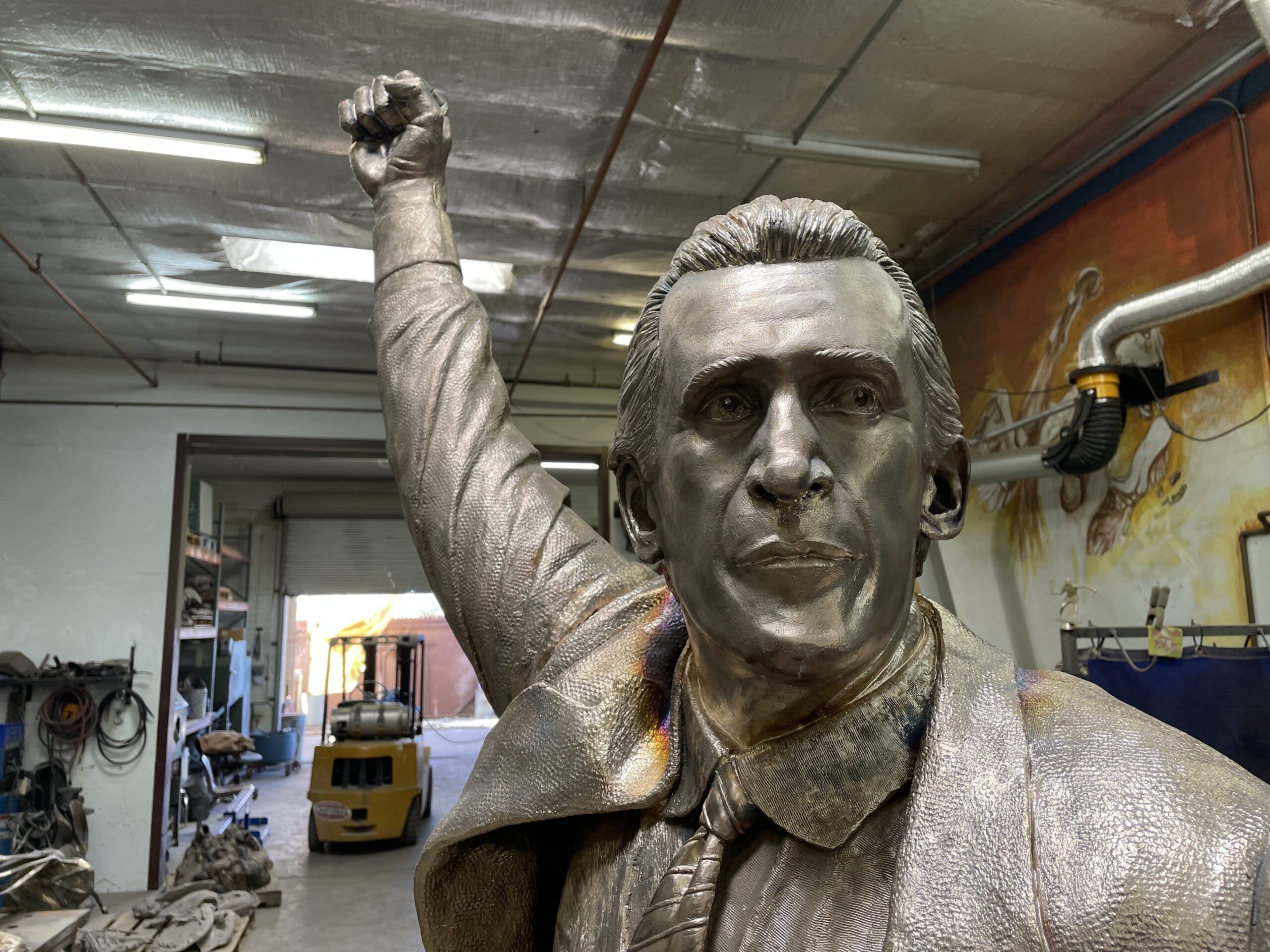
Applying the Patina
A patina is a controlled chemical treatment that changes the appearance of the bronze surface. Different techniques can produce a wide range of tones, from warm browns and traditional bronze hues to darker or more varied finishes.
Depending on the type, the patina can emphasize details, create visual depth, and influence how the monument interacts with the light of its surrounding environment.
A final protective coating helps preserve the finished surface.
Preserving an Ancient Art Method
Lost-wax casting is an ancient technique, but its relevance to contemporary public art is as strong as ever. The intricate process allows our artists to create highly detailed, enduring works at monumental scale while maintaining the human qualities of the original sculpture.
Our finished monuments represent a long chain of artistic and technical decisions. From the first mark in clay to the final patina, every stage contributes to the sculpture’s ability to communicate a story and endure over time.
Understanding the lost wax casting process offers a different way to experience the finished work. The next time you encounter a bronze monument, look beyond the surface. Every detail represents a transformation, and every sculpture carries the history of how it was made.