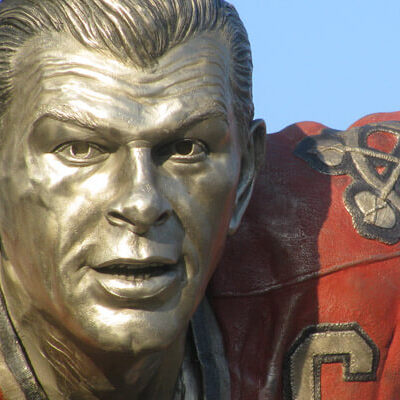
Behind the scenes of the research, engineering, and craftsmanship that justifies the investment in a landmark
Most people walk past a statue and see a finished piece of bronze, but they rarely see the hundreds of hours of forensic level research that happened before the clay was even wet. Our team begins by recognizing that the significance of a subject already exists, but the artist’s job is to uncover the emotional depth behind it. This means looking past a simple photo to understand the “why” behind a person’s legacy. Research shows that interviewing those closest to the subject (spouses, teammates, or family) is the only way to build a better picture of who they were not just in their prime, but throughout their entire career.
Hearing these personal stories about why an athlete started playing or how they persevered through injury helps the studio form a picture of the person overall, not just the player. Our design process goes through an evolving, iterative monument building process, at times led by concept, materiality or spatial parameters.

The Maquette and Design Phase
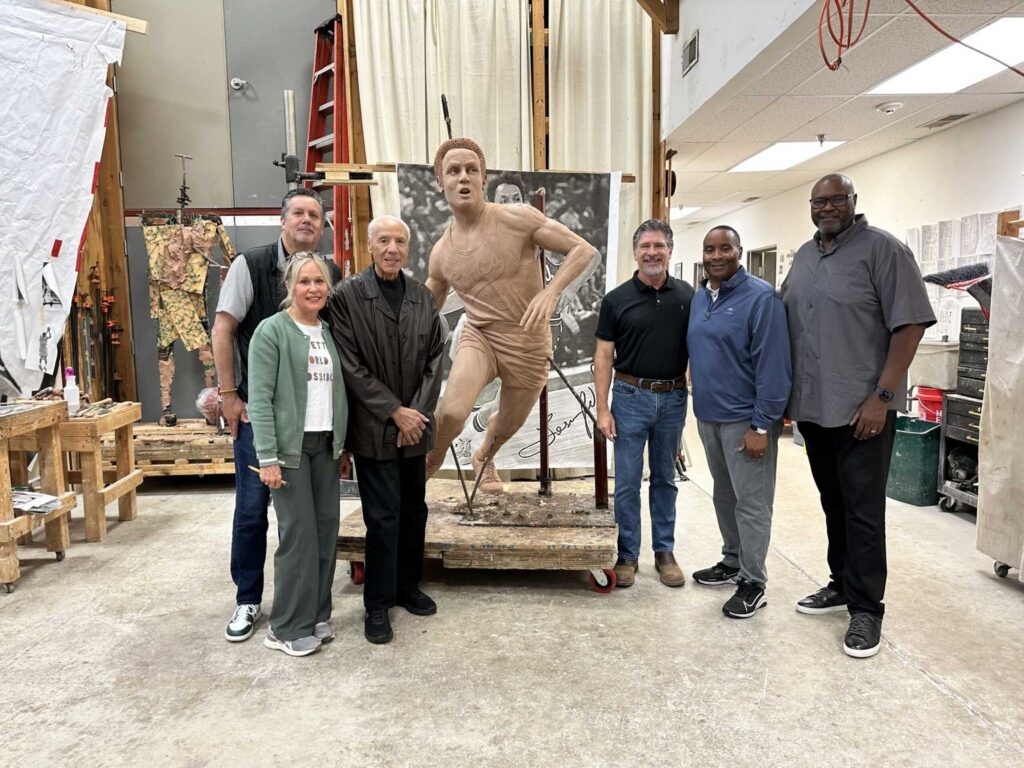
The physical journey begins with either creating the full scale sculpture or a maquette . The maquette is a small scale model that acts as the blueprint for the entire project. Using a wire skeleton and oil based clay, the sculptor sets the pose and proportions. This stage is a spearheaded feature of the studio’s collaborative monument building process because it allows for real time adjustments before the project grows to its final size. As sculptor Jessica Allen explains:
“The lead sculptor can actually move and reposition the body parts in real time in front of the subject if they visit the studio… the maquette gives them a better idea of what the clay form will look like and gives them a chance to give input about specificities.”
Scaling for Accuracy
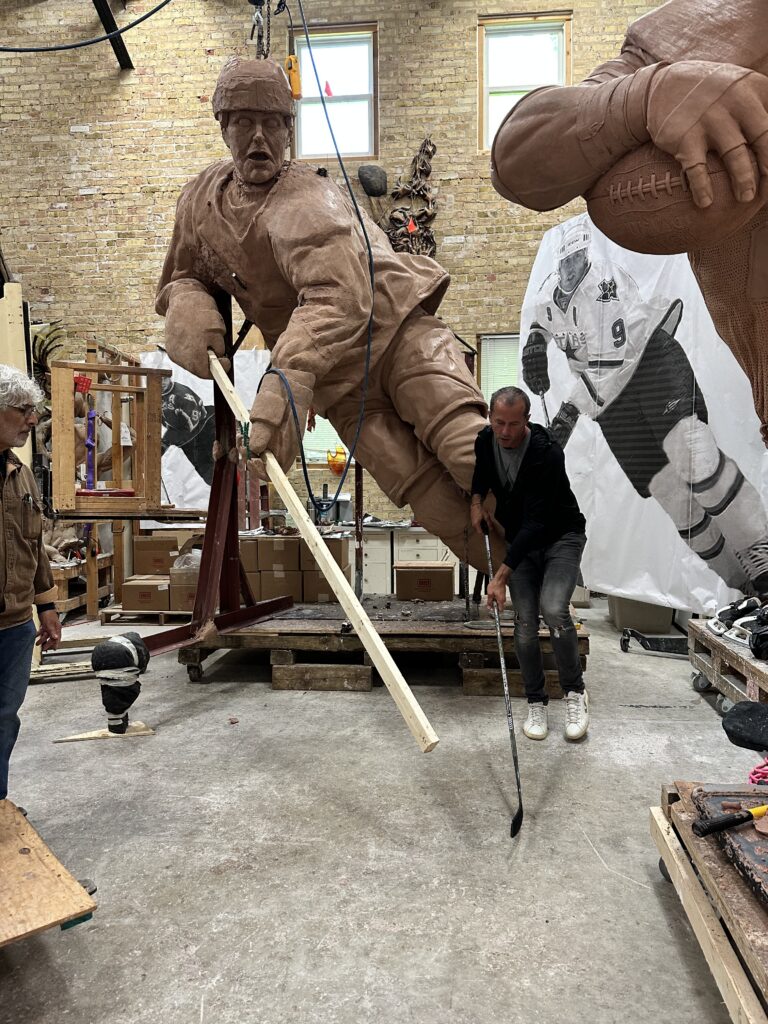
After the small model is approved, the project moves into full scale sculpting and data scaling. This is where the studio team uses a variety of tools to scale the figure from small maquette or directly to the full scale sculpture. To ensure a larger-than-life figure doesn’t look distorted, the team often has the actual subject visit the studio to take exact measurements of their body and facial features while they strike the pose. Imagine multiplying every measurement by a specific scale (i.e. turn a 6-foot figure into a 10-foot monument) to ensure the anatomy remains perfect.
This stage of the monument building process is about eliminating guesswork. The team captures how a uniform stretches and where folds fall on the body to ensure total accuracy. Lead artist Sean Michael Bell notes:
“We use scaled and full-size references of the design to capture the accuracy of the figure in motion. We collect as many pictures of the subject as possible… getting completely familiar with the pose as soon as possible streamlines the process.”
The Lost Wax Casting Finale
The final third of the year is dedicated to the lost wax casting process. This is a multi-step, age-old industrial technique where we create a mold of the clay sculpture, which then a wax version of the sculpture is created, then another mold made from ceramic-based material, and finally molten bronze is cast at nearly 2,000 degrees. Because this stage is permanent, the previous months of meticulous planning and reference gathering are what prevent wasted materials or costly mistakes.
These fine details take a long time to get right and cannot be left until the last minute. A single life-size figure usually takes one person several months of sculpting, and the entire production cycle from the initial contract to the public unveiling ceremony typically spans twelve to eighteen months.
“The best way for a client to think about this investment is an appreciation of the fans and the community, ” says Sean Michael Bell.
The epiphany for any reader is that a monument’s value isn’t found in the weight of the bronze, but in the accuracy of the story it tells. When a community gathers for an unveiling, they are seeing their own history validated in a form that will outlive everyone in the crowd. High quality art requires an immense investment of time and data because shortcuts in the studio result in a legacy that feels hollow. To see the precision that goes into our world renowned sports, civic, and military projects, visit the Rotblatt Amrany Fine Art Studio website to explore our full portfolio and the stories we’ve helped preserve.